In my last post, I covered everything you need to know about Japanese sunscreen — if you haven’t read it yet, I highly recommend starting there! 👉 All About Japanese Sunscreen
These days, Japanese and Korean sunscreens are often mentioned in the same breath, and I completely get why. Both have earned devoted global followings — and “which one is better?” is one of the most common questions I see popping up in skincare communities online.
But here’s my honest take: it’s not really about which one wins. It’s about knowing what each does well, so you can choose — or mix and match — based on your skin type, what you’re doing that day, and the finish you’re going for. And with so many options now available online, building your own little sunscreen collection has never been more fun.
In this post, I’ll walk you through the key differences between Japanese and Korean sunscreens — ingredients, texture, the beauty ideals behind them, and how to choose — plus my personal top picks from each country. Let’s get into it!
What Do They Have in Common?
Before we get into the differences, here’s the good news: both Japanese and Korean sunscreens are genuinely excellent — and they share a lot of common ground.
- SPF50+ PA++++ as standard — Both countries use the PA++++ system as the highest UVA protection rating, and SPF50+ is the norm across popular products.
- Lightweight textures — Both are miles ahead of most Western sunscreens when it comes to wearability. No thick white paste, no greasy residue.
- No white cast — Thanks to advanced UV filter technology, both countries produce sunscreens that blend seamlessly regardless of skin tone.
- Moisturizing formulas — Both incorporate hydrating ingredients like hyaluronic acid, so you won’t feel stripped or tight after application.
- Access to advanced UV filters — Neither country is limited by the FDA’s outdated approved list. Both have access to newer, more effective UV filters like Tinosorb M and Uvinul A Plus that still aren’t available in the US.
It also makes sense that both feel comfortable across Asian skin types — these products are formulated with the preferences and skin concerns of Asian consumers in mind, and it really shows.
The Key Differences
Different Beauty Ideals — The Skin Behind the Sunscreen
One of the most interesting differences between Japanese and Korean sunscreens isn’t just in the formula — it’s in the skin aesthetic they’re designed to create.
In Japan, the most coveted skin look is often described as “marshmallow skin” (マシュマロ肌) — soft, smooth, and porcelain-like, as if there’s a gentle filter over your face. Think of a delicate, matte finish that gives the impression of flawless, even-textured skin. It’s polished without looking shiny, fresh without looking dewy.
In Korea, the ideal is more like “glass skin” or “water-drop skin” — luminous, bouncy, and visibly hydrated, like a ripe piece of fruit glistening with moisture. It’s a finish that looks almost lit from within, with a natural, healthy glow that reads as youthful and plump.
These distinct ideals explain so much about why Japanese sunscreens tend toward a drier, more refined matte finish — while Korean sunscreens lean into that dewy, skin-care-forward glow. Neither is better; they’re just beautiful in different ways.
Different Philosophies Behind the Formula
Japan 🇯🇵 — UV engineering meets everyday wearability
Japan’s sunscreen industry is driven by pharmaceutical giants like Shiseido, Kao, and Rohto, who invest heavily in UV research and development. The goal has always been to build formulas with superior UV performance, durability, and a refined texture that feels invisible on the skin. Japan’s intense, humid summers pushed brands to develop products that hold up against sweat and stay comfortable all day. And Japan’s long-established cultural value of fair, clear skin created the demand that led to decades of innovation.
Korea 🇰🇷 — Skincare first, sun protection second
Korean sunscreens reflect K-beauty’s philosophy of multi-tasking, skin-first formulas. Rather than treating sun protection as a separate, functional step, Korean brands fused it with serum-level skincare benefits — using ingredients like centella asiatica, fermented rice extracts, niacinamide, and ceramides. The result is a sunscreen that doubles as a treatment, leaving skin glowing and nourished. Korea’s cultural value of luminous, hydrated skin has driven the creation of finishes that look almost cosmetically radiant.
Side-by-Side Comparison
| Japanese 🇯🇵 | Korean 🇰🇷 | |
|---|---|---|
| Skin Ideal | Marshmallow skin — soft, matte, porcelain finish | Glass / water-drop skin — dewy, luminous, juicy finish |
| UV Filter Approach | Micro-particle dispersion tech (Tinosorb M, Mexoryl SX) for feather-light textures | Tinosorb S, Uvinul A Plus — blended with active skincare ingredients |
| Texture | Lightweight, fast-absorbing, dry/matte finish | Dewy, serum-like, semi-matte to glowy finish |
| Moisturizing Ingredients | Hyaluronic acid, collagen, plant extracts | Hyaluronic acid, centella asiatica, fermented extracts, rice water |
| Functional Ingredients | Brightening (Vitamin C derivatives), anti-aging | Niacinamide, madecassoside, ceramides, probiotics |
| Finish | Matte, natural, refined | Dewy, glowing, glass-skin effect |
| Water/Sweat Resistance | Often superwater-resistant; ANESSA Milk is legendary | Good for daily wear; less emphasis on heavy-duty waterproofing |
| Sensitive Skin | Mineral-only (non-chemical) options available | Rich in EWG-certified, calming botanicals; dedicated sensitive skin lines |
| Price Range | Drugstore to high-end; wide range | Mostly drugstore to mid-range |
Which is Better for Your Skin Type?
Both countries have great options for all skin types, but here are some general guidelines to help you find your starting point:
| Skin Type / Goal | My Recommendation | Why |
|---|---|---|
| Oily / Combination skin | Japanese 🇯🇵 | Drier finish controls excess sebum throughout the day |
| Dry skin / Need hydration | Korean 🇰🇷 | Richer moisturizing ingredients — ceramides, HA, fermented extracts |
| Sensitive / Reactive skin | Either — check ingredients | Japan has mineral-only options; Korea has centella-rich, calming formulas |
| Want glowing, dewy finish | Korean 🇰🇷 | Dewy, luminous finish is K-beauty’s signature |
| Makeup primer / Under makeup | Korean 🇰🇷 | Skin-prep texture layers beautifully under foundation |
| Outdoor / Sports / Beach | Japanese 🇯🇵 | Superior water and sweat resistance; ANESSA is trusted by athletes |
| Everyday light wear | Either 😊 | Both countries have excellent lightweight daily-wear options |
My Top Picks — Japanese vs Korean
This time, I’m focusing on sunscreens that are easy to find at Japanese drugstores or online, and are primarily designed for sun protection rather than makeup primer or tone-up effects.
🇯🇵 Japanese Sunscreens — My Top 5
My top 5 Japanese picks are based on @cosme rankings (Japan’s largest beauty review platform), what I personally see being used and talked about around me here in Fukuoka, and my own years of living in Japan year-round.
① Bioré UV Aqua Rich Watery Essence — SPF50+ PA++++
| Category | Details |
|---|---|
| Type | Chemical |
| UV Filters | Proprietary “Micro Defence” formula — UV filters encapsulated in micro-capsules for even, gap-free coverage |
| Moisturizing | Ascorbyl Glucoside (Vitamin C derivative), Hyaluronic Acid |
| Key Features | Water-based, non-sticky, superwater-resistant, rinses with soap |
| Best For | Oily / combination skin, daily wear, under makeup |
| Price | ~¥1,000 |
② ANESSA Perfect UV Skincare Milk NA — SPF50+ PA++++
| Category | Details |
|---|---|
| Type | Hybrid (Chemical + Mineral) |
| UV Filters | Ethylhexyl Methoxycinnamate, DHHB, Titanium Dioxide, Zinc Oxide |
| Moisturizing | Acetyl Hyaluronic Acid Na, Water-Soluble Collagen, Green Tea Extract |
| Key Features | Super waterproof, shake-before-use 2-layer formula, friction-resistant |
| Best For | All skin types; beach, outdoor, sports |
| Price | ¥3,058 |
③ Skin Aqua Hyaluron Serum UV — SPF50+ PA++++
| Category | Details |
|---|---|
| Type | Chemical |
| UV Filters | Ethylhexyl Methoxycinnamate, DHHB |
| Moisturizing | 3 types of Hyaluronic Acid (HA, Hydrolyzed HA, Acetyl HA) |
| Key Features | Serum-like texture, waterproof, lightweight enough for face and body |
| Best For | All skin types; especially dry skin wanting hydration in a sunscreen |
| Price | ¥1,320 |
④ ALLIE Chrono Beauty Gel UV EX — SPF50+ PA++++
| Category | Details |
|---|---|
| Type | Hybrid |
| UV Filters | Proprietary “ADVAN Technology” — flat-plate mineral scatterers combined with absorbers for no white cast |
| Moisturizing | Hyaluronic Acid Na, Collagen |
| Key Features | Removes with regular face wash; beach-friendly formula; eco-conscious packaging |
| Best For | Dry / combination skin; those wanting easy removal; eco-conscious users |
| Price | ¥2,310 |
⑤ NIVEA UV Deep Protect & Care Gel — SPF50+ PA++++
| Category | Details |
|---|---|
| Type | Chemical |
| UV Filters | Ethylhexyl Methoxycinnamate, DHHB |
| Moisturizing | Hyaluronic Acid Na, Collagen, Glycerin |
| Key Features | Silky gel that melts into skin; brightening active to prevent dark spots |
| Best For | Normal / dry skin; budget-conscious daily use |
| Price | ~¥1,000 |
🇰🇷 Korean Sunscreens — My Top 5
① Beauty of Joseon Relief Sun — SPF50+ PA++++
| Category | Details |
|---|---|
| Type | Chemical |
| UV Filters | Uvinul A Plus (UVA), Uvinul T 150 (UVB), Tinosorb M (broad spectrum), Uvisorb HEB |
| Moisturizing / Functional | 30% Rice Extract, Fermented Grain Extracts, Niacinamide, Green Tea, Ginseng Extract |
| Key Features | Lightweight cream, no white cast, doubles as primer, EWG-certified ingredients |
| Best For | All skin types; especially dry and sensitive skin; glowing finish lovers |
| Price | ~¥2,000 |
② SKIN1004 Hyalu-Cica Water-Fit Sun Serum — SPF50+ PA++++
| Category | Details |
|---|---|
| Type | Chemical |
| UV Filters | Uvinul A Plus, Ethylhexyl Triazone, Tinosorb M, Diethylhexyl Butamido Triazone |
| Moisturizing / Functional | Centella Asiatica Extract, Hyaluronic Acid, Rice Extract, Oat Extract, Soybean Extract, Niacinamide |
| Key Features | Ultra-lightweight serum texture, reef-safe, no white cast, dewy finish |
| Best For | Dry / normal skin; centella fans; those who hate heavy sunscreen |
| Price | ~¥2,000 |
③ Round Lab Birch Juice Moisturizing Sunscreen — SPF50+ PA++++
| Category | Details |
|---|---|
| Type | Chemical |
| UV Filters | Ethylhexyl Triazone, Tinosorb M, Uvinul A Plus |
| Moisturizing / Functional | Birch Juice, Hyaluronic Acid, Glycerin, Panthenol |
| Key Features | Milky texture, deeply moisturizing, strengthens skin barrier, gentle on sensitive skin |
| Best For | Dry, sensitive, or compromised skin barrier; hydration-first users |
| Price | ~¥2,200 |
④ Dr.G Green Mild Up Sun+ — SPF50+ PA++++
| Category | Details |
|---|---|
| Type | Hybrid |
| UV Filters | Tinosorb M, Uvinul A Plus, Titanium Dioxide |
| Moisturizing / Functional | Centella Asiatica, Green Tea Extract, Allantoin, Panthenol |
| Key Features | Targets redness and breakouts; non-comedogenic; dermatologist-tested for sensitive skin |
| Best For | Sensitive, acne-prone, or redness-prone skin; anyone dealing with active irritation |
| Price | ~¥2,500 |
⑤ Torriden Dive-In Sun Cream — SPF50+ PA++++
| Category | Details |
|---|---|
| Type | Chemical |
| UV Filters | Uvinul A Plus, Tinosorb M, Ethylhexyl Triazone |
| Moisturizing / Functional | 5 types of Hyaluronic Acid, Madecassoside, Ceramides, Panthenol |
| Key Features | Intensely moisturizing, creamy texture without stickiness, HA-obsessed formula |
| Best For | Dry to very dry skin; anyone who feels tight or dehydrated after regular sunscreen |
| Price | ~¥2,800 |
Annie’s Honest Take — Can You Use Both?
Yessssss! — and I genuinely think it’s the smartest approach.
I don’t believe in sticking to just one sunscreen for every occasion. Your skin changes with the seasons, the weather, and what you’re doing that day — so why not let your sunscreen rotate with it?
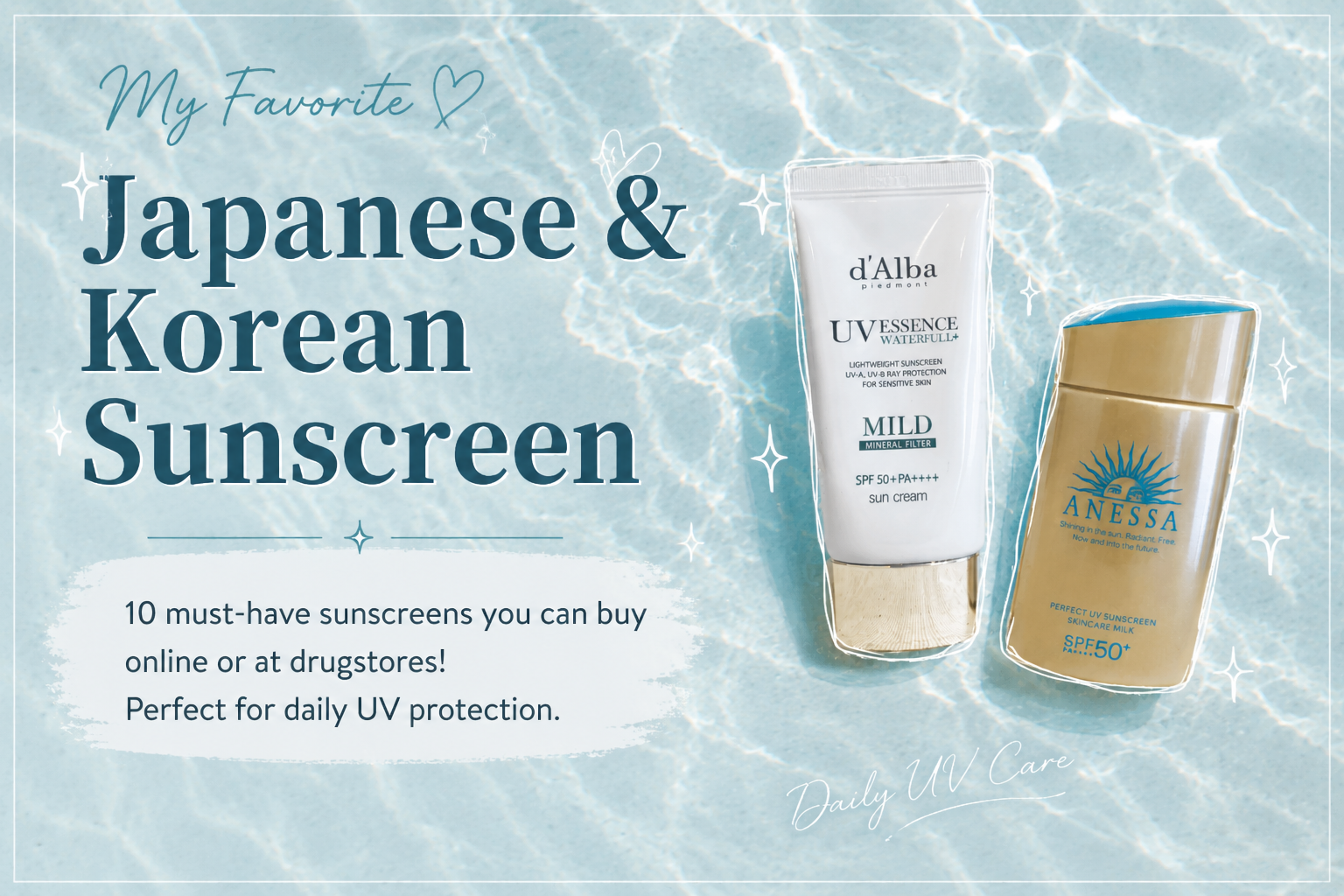
Here’s what my routine actually looks like. ANESSA Perfect UV Milk has been a part of my life since childhood — it was always there in the summers, and it even has that nostalgic summer fragrance that takes me straight back to being a kid. My mom has been using it for her tennis matches for years, and honestly? Her skin looks amazing for her age. ANESSA has always been a trusted favourite for Japanese people of all ages, and for good reason.
That said, I’ll be honest: wearing ANESSA every single day can make my skin feel a little stiff and weighed down over time. In the past, it required a dedicated cleansing oil to remove properly, which added up. But the formula has been significantly improved over the years — it’s much gentler and easier to remove now, which makes it even easier to love. These days I reach for it on high-UV days, beach trips, or long outdoor adventures. Sometimes I apply it to my legs only (my skin is noticeably tougher there) and save a lighter formula for my face.
For everyday wear, I’ve been really into the d’Alba Waterfull Mild Sun Cream. It doesn’t interfere with my makeup, leaves zero white cast, and is gentle enough for days when my skin is feeling reactive. It’s not in my top 5 ranking above — but it’s quietly become one of my go-to daily sunscreens and I wanted to mention it because it’s that good.
The key is to understand what your skin needs that day, and choose accordingly. Having two or three sunscreens you love isn’t extra — it’s smart. ☀️
d’Alba Waterfull Mild Sun Cream — Quick Overview
| Category | Details |
|---|---|
| Type | Mineral (Physical) |
| UV Filters | Titanium Dioxide, Benzotriazolyl Dodecyl P-Cresol |
| Moisturizing / Functional | White Truffle Extract (brightening + antioxidant), Hyaluronic Acid, Madecassoside, Centella Asiatica Extract |
| Key Features | No white cast, no stickiness, works under makeup, gentle enough for sensitive skin and kids, semi-matte finish with a healthy glow |
| Best For | Sensitive skin, daily wear, those who prefer mineral sunscreen without the typical white cast |
| Price | ~¥2,500 |
Final Thoughts
Japanese and Korean sunscreens both represent their countries’ best approach to protecting skin beautifully. Japan brings unbeatable UV durability and that signature marshmallow-skin finish. Korea brings skincare-grade ingredients and that coveted glass-skin glow. Neither is better — they’re different, and the beauty of it is that you truly don’t have to choose.
If you’re starting out with Asian sunscreens, my advice is to pick one from each country based on your skin type and see how they feel in your routine. You might be surprised how much you love both.
Do you have a favourite Japanese or Korean sunscreen? Still figuring out which to try first? Drop a comment below — I’d love to hear from you! 🌸
Next up: a complete guide to Hada Labo — Japan’s long-selling skincare icon, loved for decades and still a bestseller today. Stay tuned!
コメント